The Master's thesis is dedicated to solving the relevant scientific and practical task of improving the efficiency, stability, and energy efficiency of a mobile six-legged robot locomotion through comprehensive 3D modeling and algorithmic optimization.
The object of the study is the process of 3D modeling of a hexapod robot to investigate and improve its characteristics. The subject of the study is the methods and tools of 3D modeling, motion control algorithms, and methods for their optimization in virtual environments.

The master's thesis is devoted to solving the urgent scientific and applied task of creating a mobile tracked platform for automated reconnaissance and environmental monitoring. The work substantiates the necessity of developing an affordable yet functional robotic complex capable of performing tasks in high-risk conditions for humans. The primary focus is on designing the hardware-software architecture that combines autonomous navigation, secure communication channels, and multi-sensor environmental analysis.

Relevance of the topic. In the context of rapid digital transformation, computer-integrated systems are becoming the foundation of critical infrastructure, ensuring deep interaction between informationand operational technologies. However, the increasing complexity of such systems significantly expands the attack surface, where cyber incidents can cause not only data loss but also physical accidents, production stoppages, and threats to personnel safety. Traditional protection tools often prove ineffective due to data fragmentation and the problem of information overload on personnel caused by false positives. Therefore, automating monitoring through the implementation of SIEM systems is a critical task. This allows for centralized event collection, real-time correlation, and increased resilience of technological processes against modern threats.

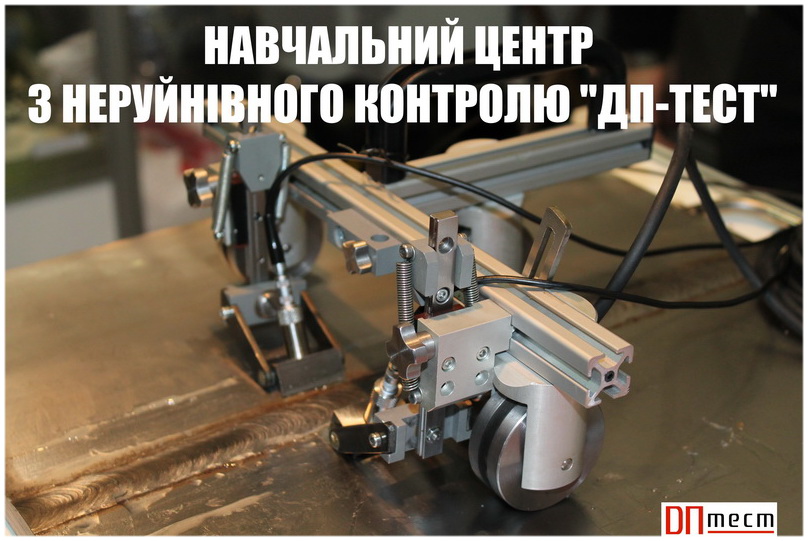
The paper describes an automated ultrasonic pipe inspection system using LRUT technology. The topic is relevant because, in the current environment of automation and growth in non-destructive testing, there is a need for systems capable of performing such tasks effectively.
The relevance of the work lies in the need to improve the accuracy and reliability of defect detection in large-diameter pipelines using automated ultrasonic systems.
The aim of the work is to investigate the possibilities of using automated ultrasonic pipe inspection systems and to develop a system for the accurate detection of defects in large-diameter and long pipelines.

Modern robotics increasingly operates in modes of safe interaction with humans and fragile objects, where traditional rigid grippers no longer ensure the required shape conformity, uniform force distribution and sufficient safety. Biomimetic flexible Fin-Ray grippers based on silicone materials make it possible to adaptively envelop an object without damaging it, but their practical implementation still lacks well-established solutions regarding the choice of materials, reinforcement schemes, integration of force sensors and matching with the parameters of industrial manipulators. A comprehensive study is therefore relevant, one that combines a structural and materials-science based approach to the design of a soft gripper with an analysis of its potential application both as an independent modular product and in combination with existing robotic solutions.

АСНК КПІ ім. Ігоря Сікорського, 2021